The Future of Pakistan’s Packaging: Why Post-Consumer Recycled Resin (PCR) Could Be a Game-Changer
November 15, 2025
“Recycling plastic is one of the easiest ways to reduce your carbon footprint.” National Resources Defense Council (NRDC)
Details
The packaging industry in Pakistan is at a turning point. For years, it has thrived as one of the country’s most dynamic manufacturing segments, employing thousands and serving both domestic and export markets. Plastic packaging alone makes up more than half of all plastic use in Pakistan, according to research by the Consortium for Development Policy Research (CDPR). The sector comprises over 10,000 units, including large, medium and small plants that together generate significant jobs, investment, and tax revenue. Yet, as global attention shifts toward sustainability, Pakistan’s packaging sector faces a critical question: how will it adapt to the age of circularity?
Across the world, the packaging industry is undergoing a transformation driven by one powerful material, post-consumer recycled (PCR) resin. Globally, the market for PCR plastic packaging is projected to grow from USD 53.5 billion in 2025 to over USD 102 billion by 2035, expanding at a compound annual growth rate of nearly 6.7 %. Other market estimates suggest the PCR packaging industry was already worth USD 42 billion in 2023 and will nearly double by 2034. In volume terms, this means global consumption of PCR packaging could rise from 6.98 million tons in 2025 to over 10 million tons by 2030.
For Pakistan, these numbers represent more than just global trends, they are an urgent signal of where the world is heading. The country’s heavy reliance on virgin plastics and imported resins makes it particularly vulnerable to price volatility and environmental scrutiny. By embracing PCR resin, Pakistan’s packaging producers could not only reduce costs and import dependency but also align with the sustainability standards increasingly demanded by global brands and export markets.
But what exactly is PCR, and why does it matter?
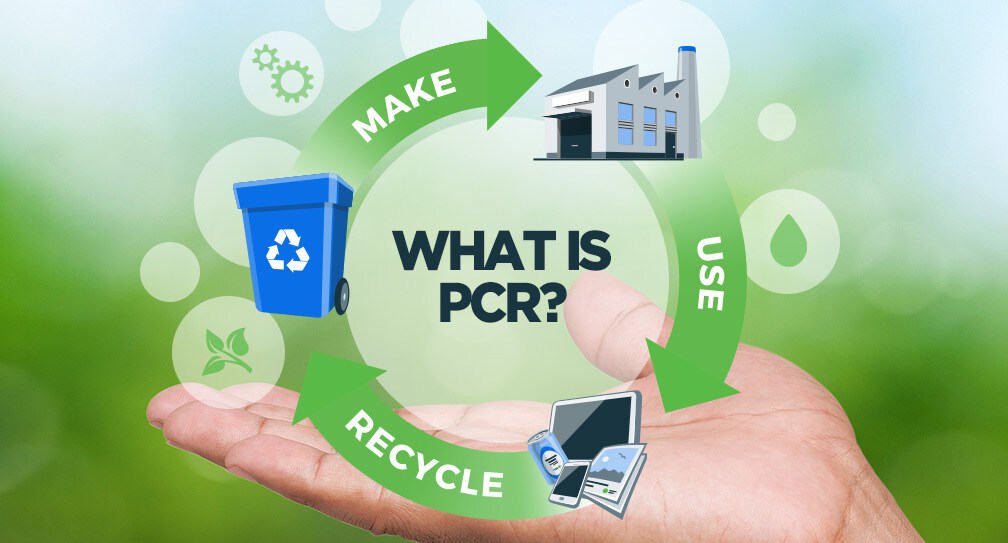
PCR resin is derived from post-consumer plastic materials that have already been used, collected, sorted, cleaned and then reprocessed into new packaging. Instead of relying on virgin, fossil-based resins, PCR gives plastics a second life, keeping them in circulation rather than sending them to landfills or oceans. The benefits are profound. Using recycled PET instead of virgin can cut CO₂ emissions significantly, as highlighted by Global Newswire. PCR also supports the circular economy, where waste becomes raw material, and aligns with extended producer responsibility frameworks being implemented around the world. For brands, adopting PCR isn’t just a sustainability gesture, it’s a competitive advantage in the eyes of increasingly eco-aware consumers.
Globally, PET remains the most dominant PCR material, making up roughly 45 % of the total PCR packaging volume in 2024. This reflects its maturity and suitability for beverage bottles, personal care packaging, and food containers. For Pakistan, where beverage and FMCG packaging represent large and growing sectors, the transition toward PCR PET could unlock immediate gains in sustainability without compromising functionality.
Pakistan’s case for PCR is particularly strong. First, more than half of the nation’s plastic use is in packaging, creating a huge opportunity to substitute virgin resins with recycled ones. Second, as Pakistan exports from textiles to food and beverages - become increasingly linked to global value chains, compliance with international sustainability standards will be non-negotiable. Countries and corporations worldwide are introducing minimum recycled-content mandates, meaning exporters who fail to adopt PCR could find themselves excluded from major markets. Third, Pakistan imports much of its plastic resin, exposing manufacturers to currency fluctuations and supply chain disruptions. Local PCR production could mitigate those risks while simultaneously addressing one of the country’s biggest environmental challenges: plastic waste.
Pakistan generates an estimated 49.6 million tons of solid waste every year, around 9 % of which is plastic. A large share of this waste comes from disposable packaging, bags, bottles, and wrappers that are rarely recycled. Integrating PCR into the packaging supply chain could turn this problem into an opportunity, closing the loop by converting waste into raw material.
The hurdles
However, despite its potential, the shift to PCR in Pakistan will not be easy. The first and most significant hurdle lies in the availability of quality recycled resin. Globally, even mature recycling systems struggle to produce enough high-grade PCR to meet packaging standards, particularly for food-contact applications. Pakistan’s collection and sorting systems are fragmented and largely informal. Mixed polymer waste, contamination, and outdated recycling technologies make it difficult to generate consistent, food-safe PCR resin. As the CDPR notes, Pakistan’s plastics manufacturing technology remains “at least two generations behind” international standards, an innovation gap that must be bridged to compete globally.
Technical challenges are also considerable. Packaging made with high PCR content must still meet demanding performance and aesthetic standards. Clarity, strength, barrier properties, and food safety all become complex issues when PCR replaces virgin resin. In some cases, manufacturers may need to blend recycled and virgin materials or invest in advanced de-contamination and sorting technologies to achieve the required performance.
Then there’s the question of regulation. While many countries have introduced minimum recycled-content requirements, extended producer responsibility (EPR) laws, and deposit-return systems, Pakistan’s policy environment is still evolving. Without clear mandates or incentives, adoption will depend on voluntary industry leadership, a slower and less predictable path.
Economics is another challenge. Although PCR can reduce dependence on imported raw materials, it often carries a cost premium in markets with weak recycling systems. Globally, studies have shown price gaps of up to 35 % between recycled and virgin resin in some markets. In Pakistan, achieving cost parity will require investment in domestic recycling capacity, stable collection networks, and policy support.
Brand and consumer perception also play a role. Many brands remain hesitant to switch to high-PCR packaging, fearing inconsistencies in material quality or negative impacts on product appearance. At the same time, consumers in Pakistan are only beginning to recognize the value of sustainable packaging, making education and awareness campaigns critical.
The positive side
Despite these challenges, the direction is clear. To unlock the benefits of PCR, Pakistan needs a strategic roadmap that brings together policy, industry, and consumers. Setting measurable targets, such as achieving 10% - 15% PCR content in beverage bottles by 2030, could be a strong start, aligning local efforts with global trends. Investment in recycling infrastructure is essential: collection, sorting, de-contamination, and polymer separation must reach industrial scale. Governments could support this through incentives like tax relief or grants for PCR production.
Brand collaboration will be equally vital. Major FMCG and beverage players can pilot PCR packaging, promote their sustainability credentials, and help create market demand. Certification systems ensuring food-grade and quality assurance of PCR resin would boost brand confidence, while consumer education could build a market preference for products “packaged in recycled plastic.”
If Pakistan’s packaging sector grows at an annual rate of 5-8 %, and PCR adoption reaches even 20–30 % of total resin use within the next decade, the country could generate demand for tens of thousands of tons of PCR resin each year. That would not only reduce plastic pollution but also create a thriving new segment of the economy, recycling plants, technology suppliers, and new green jobs.
The global market for PCR packaging is already expanding rapidly, from USD 53 billion in 2025 to USD 102 billion by 2035. For Pakistan, seizing even a small share of this growth could bring economic and environmental dividends. The challenge is no longer whether to move toward PCR, but how fast.
The next decade will determine whether Pakistan’s packaging industry continues to rely on a linear, waste-driven model, or whether it joins the global circular economy. PCR offers a way forward: cleaner, smarter, and more resilient. With the right policy vision, infrastructure investment, and industrial collaboration, Pakistan can transform its packaging sector from part of the problem into a cornerstone of sustainable growth.
How can we help you?
Have questions? Get in touch and we'll be happy to help!

Subscribe
Select topics and stay current with our latest insights
NovelOPS Insights - Get our latest thinking on your iPhone, iPad, or Android device.


© 2025 NovelOPS & Company